L1halo
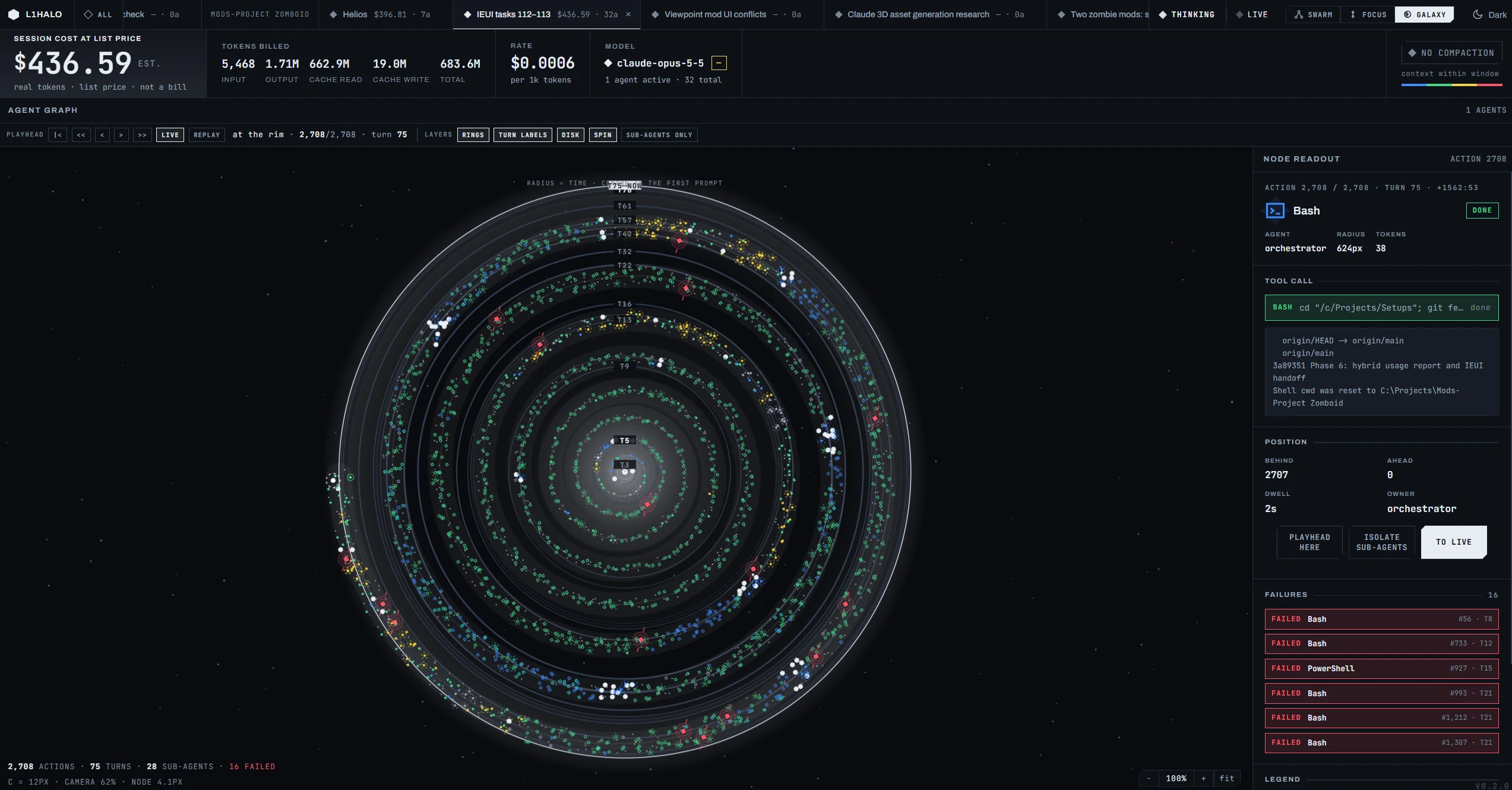
A desktop view of Claude Code sessions as they run: what the orchestrator is doing right now, which sub-agents are running or parked, how much context is left and what the session has cost.
Screenshot pending
assets/l1halo-galaxy.webpWhat it shows
- Orchestrator state, from the live stream: thinking, working, dispatching, awaiting background agents, your turn, or ended. A context bar visibly drops when the context is compacted.
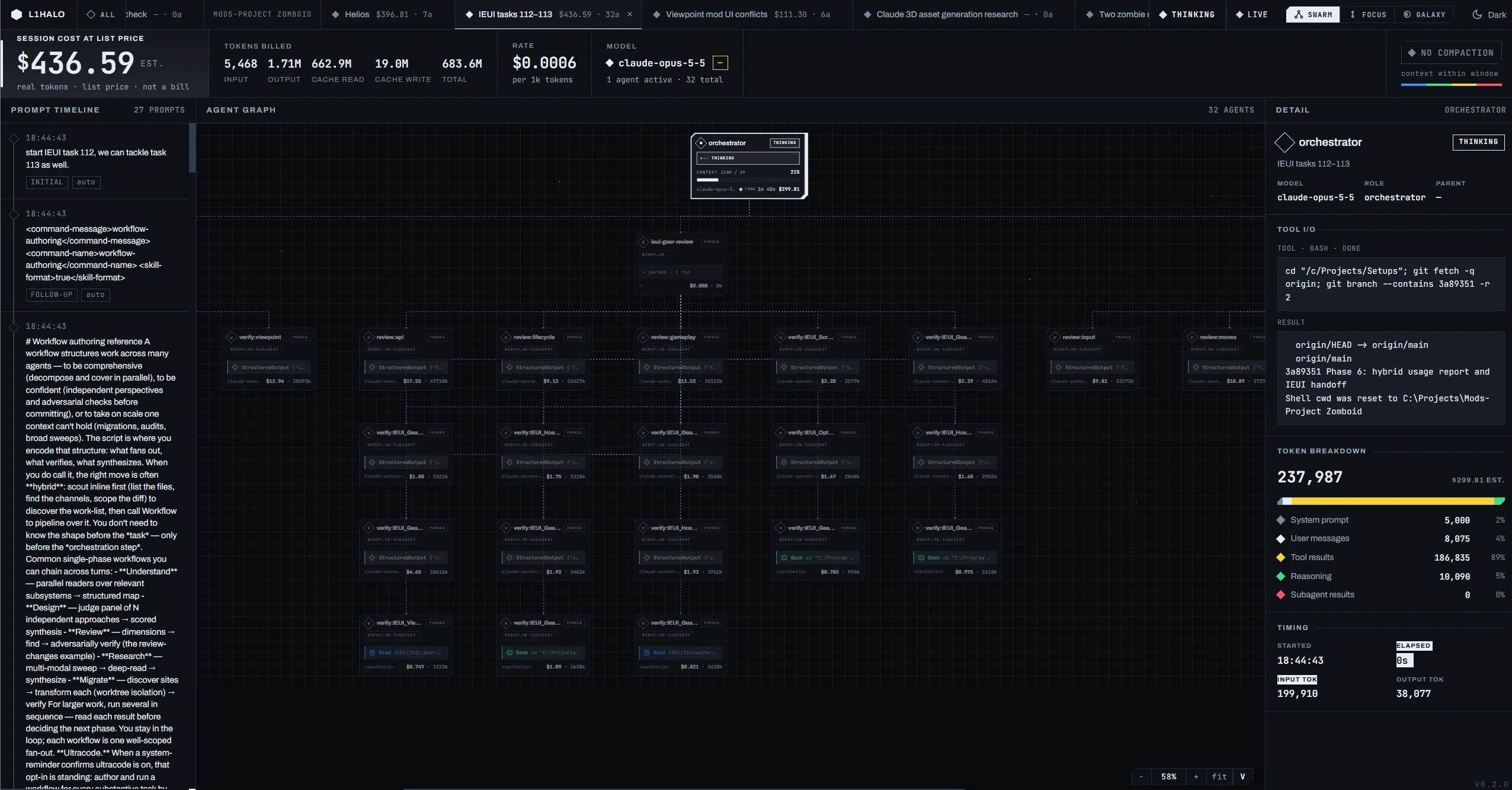
- Sub-agents appear when they actually spawn, under whoever dispatched them, with role, model and colour read from the project's agent definitions. Workflow runs show one node per run with their agents beneath it.
- Tool calls by family: reads, edits, searches, shell commands and dispatches each get their own glyph and colour, so twenty calls in a row have a rhythm instead of twenty identical rows.
- Cost from the real usage blocks in the transcript, priced per token type, not an estimate.
- A prompt timeline: click an earlier prompt to rewind the graph to the end of that turn. Agents that had not run yet appear as ghosts.
Screenshot pending
assets/l1halo-swarm.webp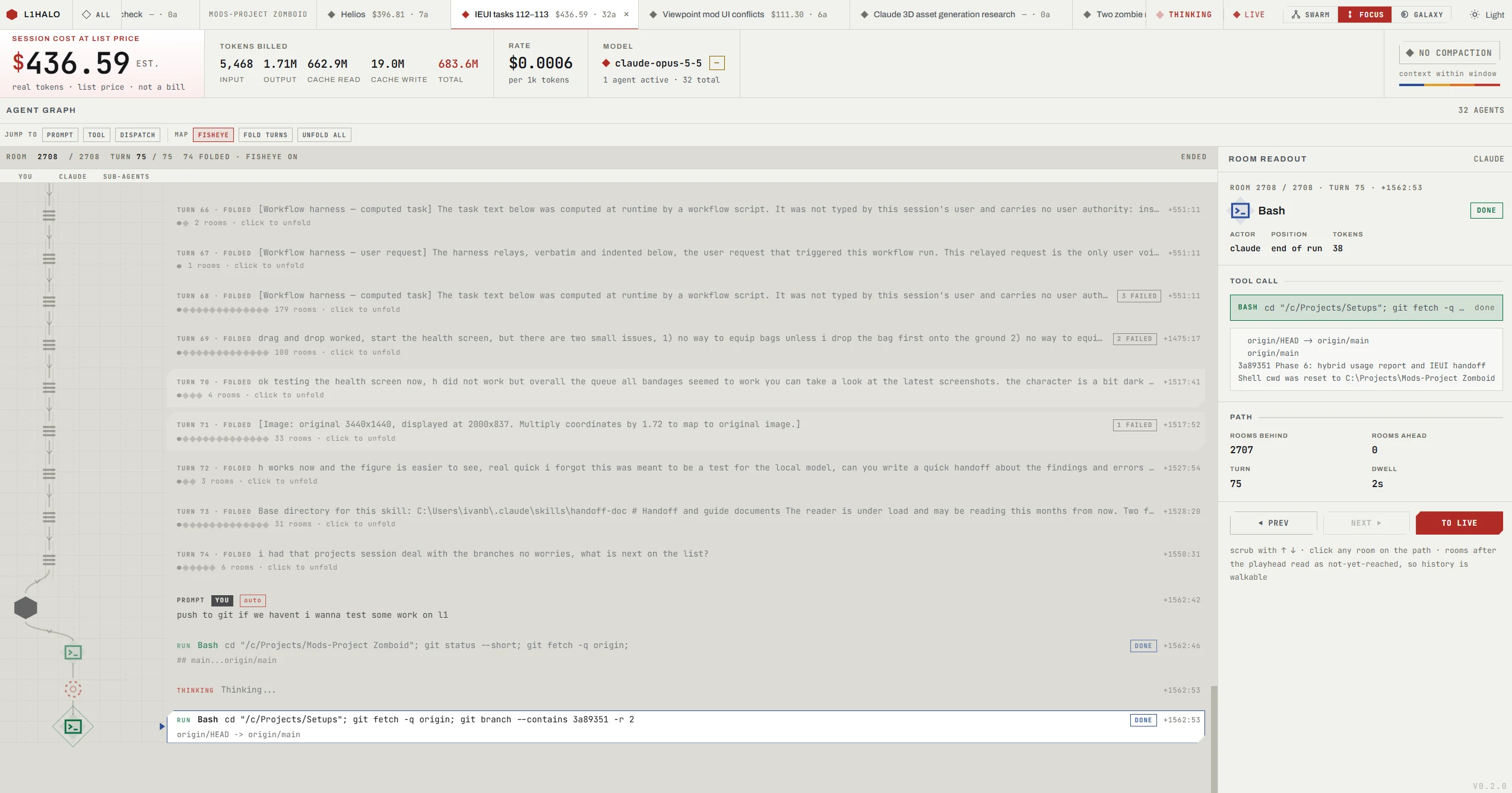
Screenshot pending
assets/l1halo-focus.webp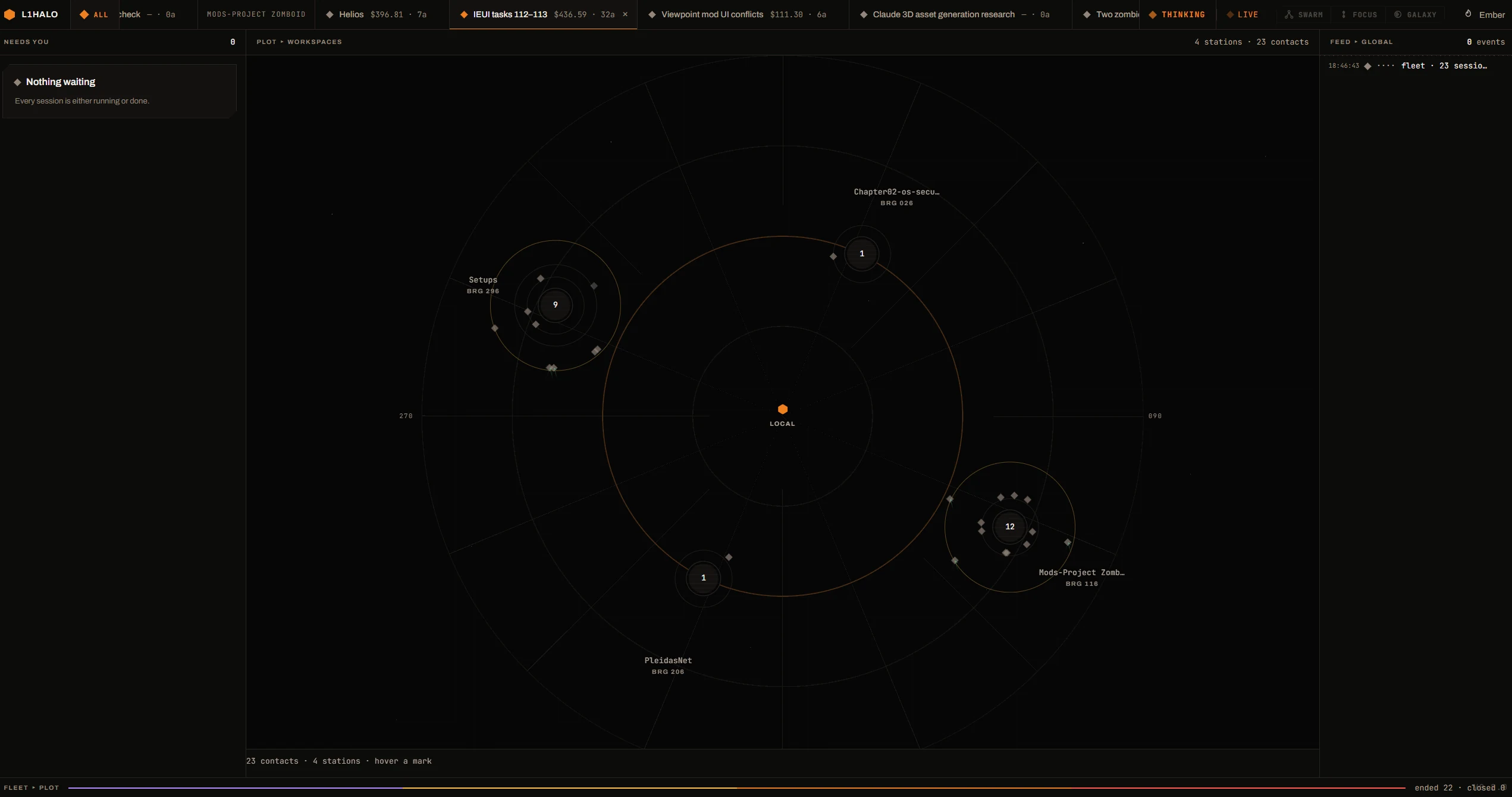
Screenshot pending
assets/l1halo-fleet.webp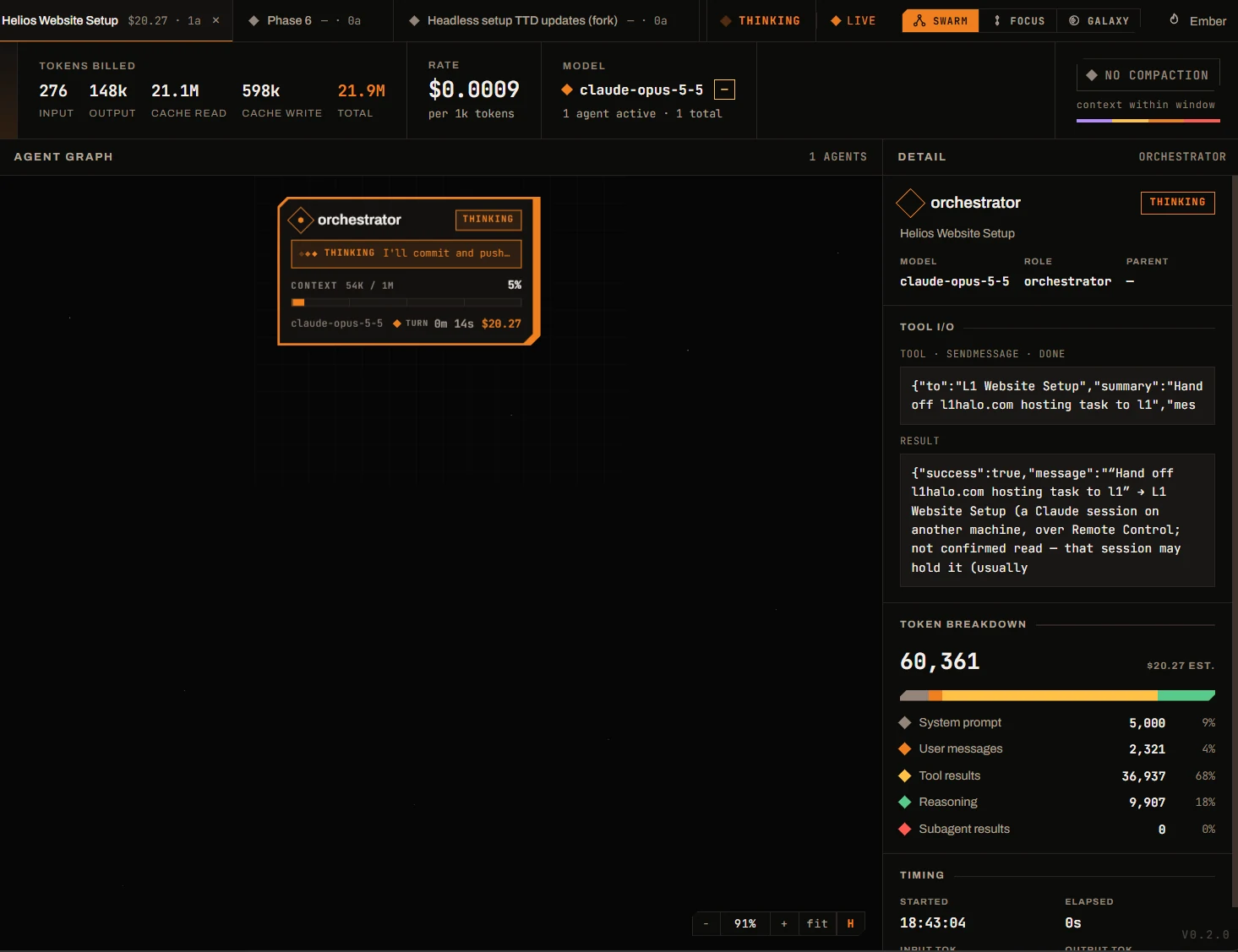
Screenshot pending
assets/l1halo-detail.webpHow it is built
It started as a fork of agent-flow. The original canvas UI ran a continuous animation loop and used a lot of memory in Firefox, so I rebuilt the frontend in plain DOM and SVG with no bundler and no build step, and vendored the relay engine so I could extend it directly. The upstream telemetry client and its hardcoded key are gone.
- Relay: a local Node process reads Claude Code transcripts and hook events and streams them to the UI from 127.0.0.1.
- Hooks: it registers 7 Claude Code hooks on first launch, keeps a backup of the original settings, and the uninstaller removes exactly those 7 and nothing else.
- Shell: a Tauri app with a pinned, checksum-verified Node runtime. Per-user install, no admin rights, 23.9 MB installer.
- One install, every project: point it at the parent folder and each subfolder becomes its own session, grouped by workspace.
Project Zomboid modsOpen ▸